
 By Robin Smith
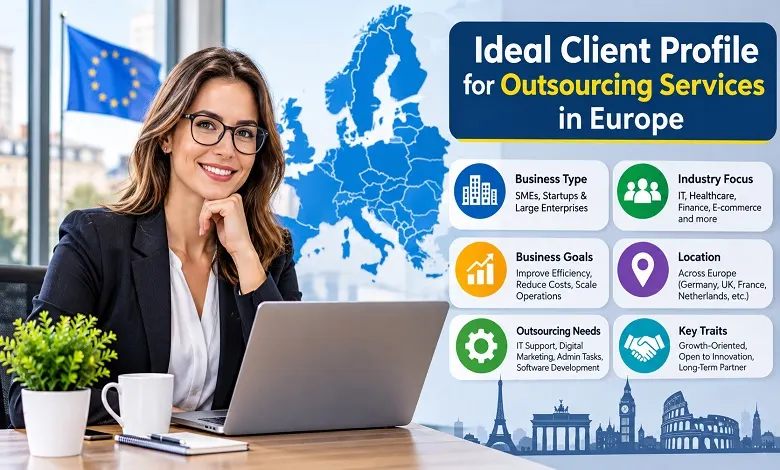
Europe is one of the most attractive markets for outsourcing service providers because businesses across the region are looking for ways to improve efficiency, access specialized expertise, reduce operational pressure, and scale without expanding their internal teams unnecessarily. From startups and digital agencies to established enterprises, companies increasingly consider outsourcing for technology, marketing, customer support, finance, and other business operations.
However, not every company is a suitable outsourcing client. Businesses differ in their budgets, operational needs, decision-making processes, and willingness to work with external providers. Identifying the right prospects is essential for building a sustainable outsourcing business.
Developing an ideal client profile for outsourcing services in Europe helps providers focus their sales and marketing efforts on companies that are more likely to need their services, have the resources to purchase them, and value long-term partnerships.
This guide explains how to identify ideal outsourcing clients in Europe, which industries to target, what characteristics to look for, and how to build a more effective prospecting strategy.
An ideal client profile (ICP) is a description of the type of business that is most likely to benefit from a particular service. It helps outsourcing companies identify potential customers based on company characteristics, business challenges, operational requirements, and purchasing potential.
Unlike a general target audience, an ICP focuses on businesses that have a strong fit with the provider’s capabilities and service model.
For example, an outsourcing company offering software development may find that growing technology startups and mid-sized SaaS businesses are better prospects than companies with very small budgets or fully established internal engineering departments.
Similarly, a digital marketing outsourcing agency may target European businesses that want to increase online visibility but lack in-house SEO, content, paid advertising, or analytics specialists.
A well-defined ICP helps providers prioritize qualified prospects, personalize outreach, improve conversion rates, and avoid spending too much time contacting businesses that are unlikely to become clients.
European businesses outsource for different reasons depending on their industry, company size, and growth stage. Some want access to skills that are difficult to recruit locally, while others need additional capacity to handle increasing workloads.
Hiring experienced professionals in areas such as software development, cybersecurity, SEO, data analytics, automation, and digital marketing can be challenging. Outsourcing allows businesses to access specialized expertise without building every capability internally.
Companies often experience changing workloads due to seasonal demand, expansion, new projects, or changing market conditions. Outsourcing gives them flexibility to increase or reduce external support according to business needs.
Outsourcing can help businesses manage operating costs, avoid some recruitment and training expenses, and allocate resources more effectively. Cost savings depend on the service, provider, quality requirements, and management overhead.
Businesses expanding into new markets or launching new products may need additional support quickly. Outsourcing can provide access to teams and resources that help them execute projects without lengthy internal recruitment processes.
Delegating repetitive or specialized tasks allows business owners and internal teams to focus on strategy, customer relationships, product development, and other important responsibilities.
The strongest outsourcing prospects are usually businesses with identifiable operational challenges, a clear need for external expertise, and sufficient resources to invest in professional services.
Rather than targeting every European company, providers should focus on organizations with characteristics that align with their service offerings.
Small and medium-sized enterprises (SMEs) can be attractive outsourcing clients because they often need professional support but cannot justify hiring full-time specialists for every function.
These businesses may outsource accounting, IT support, web development, marketing, customer service, data entry, administrative tasks, or creative services.
An SME becomes a stronger prospect when it is growing, has an established customer base, and is experiencing workload or skill gaps that affect business performance.
Startups experiencing rapid growth often need to develop systems, launch products, acquire customers, and manage operations simultaneously. Their internal teams may be small and stretched across multiple responsibilities.
Outsourcing can help startups access technical, creative, and operational resources while maintaining flexibility.
Companies that have recently raised funding, launched new products, expanded into new markets, or begun hiring are potential prospects, although funding or growth signals should be validated rather than assumed to indicate an outsourcing budget.
Digital agencies, consulting firms, design studios, and marketing businesses frequently need additional capacity to complete client projects.
They may outsource SEO, content production, web development, graphic design, paid advertising management, research, and technical implementation.
These businesses can be particularly valuable prospects for outsourcing providers offering white-label services because the agency may require consistent support across multiple client accounts.
Companies that have a small internal team but need specialized knowledge are often suitable outsourcing prospects.
For example, a business with an internal marketing manager may not have dedicated SEO specialists, conversion optimization experts, developers, or technical analysts.
Outsourcing specific functions can complement the existing team rather than replace it.
Businesses entering new countries or launching products in additional European markets may require localization, market research, multilingual customer support, marketing execution, software development, or administrative assistance.
Expansion creates new operational demands, making companies with clear growth plans potential outsourcing clients.
Different industries have different outsourcing requirements. Understanding these needs helps service providers create more relevant offers and identify prospects with a stronger business fit.
| Industry | Common Outsourcing Needs | Potential Client Signals |
| Technology and SaaS | Development, QA, cybersecurity, data, technical support | Product expansion, technical hiring, new releases |
| Digital marketing | SEO, PPC, content, design, analytics | Growing client portfolio, agency expansion |
| E-commerce | Customer support, product listings, development, marketing | Growing catalog, new markets, increased order volume |
| Financial and professional services | Accounting support, data processing, research, administration | Expanding operations, reporting workload |
| Healthcare and wellness | IT, marketing, administrative support, scheduling | New locations, digital transformation |
| Manufacturing | IT, data, engineering support, procurement administration | Modernization, production expansion |
| Real estate | Lead management, marketing, CRM administration, research | New offices, expanding property portfolio |
| Travel and hospitality | Booking support, content, marketing, customer service | New destinations, seasonal demand, expansion |
Industry alone is not enough to qualify a prospect. A business should also have a relevant need, the ability to purchase, and a reasonable fit with the provider’s experience.
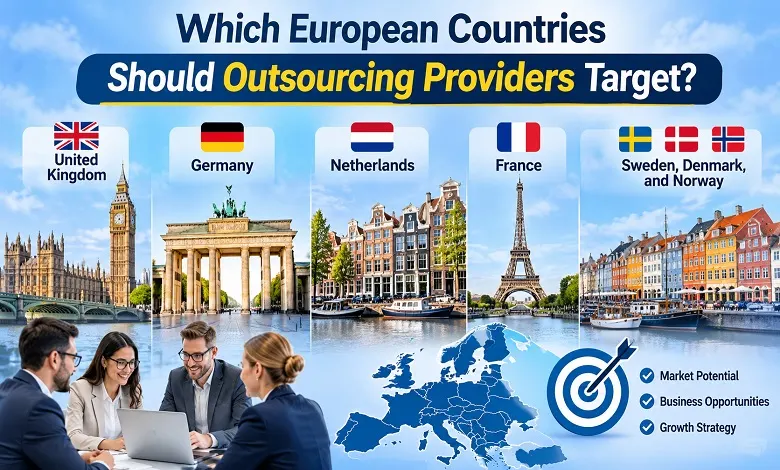
Europe is not a single business market. Countries differ in language, business culture, labor costs, technology adoption, purchasing behavior, and regulatory environments.
Outsourcing providers should select markets based on their services, communication capabilities, pricing, and the industries they can serve effectively.
The UK is an attractive market for outsourcing providers offering IT, marketing, customer service, finance, and business support.
Its large business services ecosystem and widespread use of English can make prospecting easier for providers that sell internationally.
Digital agencies, SaaS businesses, e-commerce companies, consultancies, and SMEs can be potential target segments.
Germany has a substantial manufacturing, engineering, technology, and business services economy.
Companies may require software development, IT support, automation, data services, engineering assistance, digital marketing, and specialized operational support.
Providers targeting German businesses should consider language expectations, industry-specific requirements, data protection, and professional communication standards.
The Netherlands has a strong international business environment and a substantial technology, logistics, e-commerce, and professional services sector.
English is commonly used in many international business environments, making it a potentially accessible market for outsourcing providers that operate in English.
Growing digital businesses, SaaS companies, logistics firms, and online retailers may offer relevant prospects.
France offers potential clients across technology, e-commerce, professional services, manufacturing, hospitality, and marketing.
French-language communication can be an important factor when approaching local companies, especially when the service involves customer-facing activities or localized marketing.
The Nordic countries have digitally advanced business environments and companies that may seek external support in technology, analytics, marketing, software development, and specialized operations.
Potential clients include technology companies, SaaS businesses, e-commerce brands, and growing professional service firms.
Providers should assess their service fit, pricing expectations, language requirements, and ability to deliver consistently before prioritizing these markets.
A company may fit your ICP but still have no immediate reason to purchase. Identifying buying signals helps distinguish general prospects from businesses that may be actively looking for external support.
Companies advertising multiple roles in a specific department may be experiencing growth or operational pressure.
For example, a digital agency hiring account managers and sales staff but not expanding its technical team could potentially need external production support. This is a signal to investigate, not proof of an outsourcing need.
Product launches often create demand for development, testing, marketing, content, customer support, and other services.
Businesses announcing new products or major updates may be worth researching for relevant outsourcing opportunities.
New offices, new markets, increased customer volume, acquisitions, and expanding service offerings can create additional workload.
These events provide a reason to initiate relevant outreach, provided the outsourced service connects directly to the company’s expansion needs.
Businesses with small teams managing multiple responsibilities may need help completing specialized tasks.
Researching the company’s team structure, job openings, service offerings, and recent business activity can help identify possible gaps.
Companies already working with freelancers, external agencies, contractors, or offshore teams may be familiar with outsourcing arrangements.
Existing outsourcing activity can indicate openness to external support, although the provider still needs to demonstrate value and differentiation.
Reaching the right decision-maker can significantly improve business development results. The relevant contact depends on the outsourced service, company size, and purchasing structure.
| Outsourcing Service | Relevant Decision-Makers |
| IT and software development | CTO, CIO, Head of Engineering, Technical Director |
| SEO and digital marketing | Marketing Director, CMO, Head of SEO, Agency Owner |
| Customer support | Customer Support Director, COO, Operations Manager |
| Finance and accounting | CFO, Finance Director, Controller |
| Administrative support | Founder, Operations Director, Office Manager |
| Design and creative services | Creative Director, Marketing Manager, Agency Owner |
| Data and analytics | Head of Data, Analytics Director, CTO |
| Business process outsourcing | COO, Operations Director, Managing Director |
In smaller companies, founders and CEOs often make outsourcing decisions directly. Larger organizations may require approval from multiple departments, procurement, finance, IT, or legal teams.
Before contacting someone, verify that their responsibilities match the service being offered.
A clear prospecting process helps outsourcing providers find relevant European businesses and develop stronger sales opportunities.
Start with a specific service rather than presenting a broad list of everything your company can do.
For example, instead of offering general business outsourcing, focus on SEO support for digital agencies, software development for SaaS companies, or customer service support for e-commerce brands.
A focused offer makes it easier to identify relevant companies and communicate your value.
Use business directories, LinkedIn, company websites, industry associations, job boards, and other reliable sources to identify prospects.
Collect relevant information such as company name, website, country, industry, size, services, potential need, and appropriate contact.
Not every company on your list should receive the same message.
Review its business model, current services, team structure, recent activity, and potential outsourcing requirements. Prioritize companies that have a clear connection to your service.
Explain why your service may be relevant to the company instead of sending a generic message.
A digital agency may be interested in flexible white-label production support, while a SaaS company may need additional development capacity or testing resources.
The message should focus on a potential business problem and a realistic solution.
Monitor outreach activity, replies, meetings, qualified opportunities, and conversions.
Review which industries, countries, company sizes, and messages generate the most positive responses. Use this information to improve targeting instead of increasing outreach volume without a clear strategy.
One of the most common mistakes is targeting every business in Europe without considering its actual needs. A broad prospect list may contain thousands of companies but generate few qualified conversations.
Another mistake is focusing exclusively on company size. A large company may have an established internal team and strict procurement processes, while a smaller growing business may have an immediate need and a faster buying process.
Providers should also avoid relying entirely on generic outreach messages. Businesses are more likely to pay attention when communication demonstrates an understanding of their industry, services, and potential challenges.
Ignoring local business culture, language preferences, GDPR obligations, and contracting expectations can also create difficulties. Providers should understand the requirements relevant to their services and prospecting activities before entering a market.
Developing an ideal client profile for outsourcing services in Europe helps providers focus on companies that have a genuine need for external expertise, sufficient resources, and a strong fit with their services.
SMEs, growing startups, digital agencies, technology companies, e-commerce businesses, and organizations expanding into new markets can be promising prospects. However, the strongest opportunities come from businesses showing clear buying signals, operational challenges, and a reason to seek external support.
By choosing suitable countries, focusing on specific industries, identifying relevant decision-makers, and building a targeted prospecting process, outsourcing providers can improve lead quality and create more sustainable business relationships across Europe.
The key is to stop targeting companies simply because they exist and start identifying businesses that have a specific problem your outsourcing service can solve.
A. An ideal client profile describes the type of business that is most likely to need, afford, and benefit from your outsourcing services. It typically includes industry, company size, location, business model, operational needs, growth stage, and purchasing characteristics.
A. The UK, Germany, Netherlands, France, and the Nordic countries can be attractive markets. The best country depends on the outsourcing service, language capabilities, target industry, competition, pricing, and client requirements.
A. Growing SMEs, startups, digital agencies, SaaS businesses, e-commerce companies, and businesses with limited in-house expertise are potential outsourcing clients. Their likelihood of purchasing depends on their operational needs, budget, and current priorities.
A. Use LinkedIn, company directories, business websites, job listings, industry associations, and relevant business events. Identify companies with growth signals or operational needs, qualify them, and contact appropriate decision-makers with personalized offers.
A. Decision-makers may include founders, CEOs, CTOs, CMOs, operations directors, department heads, procurement managers, or finance leaders. The relevant person depends on the service being outsourced and the company’s organizational structure.
A. Technology, SaaS, digital marketing, e-commerce, financial and professional services, healthcare, manufacturing, real estate, and travel businesses may outsource specialized or operational functions.
A. Providers can qualify leads by evaluating service relevance, company size, operational challenges, growth signals, budget potential, existing outsourcing arrangements, decision-maker access, and purchasing timing.
 Mustafizur