
 By Robin Smith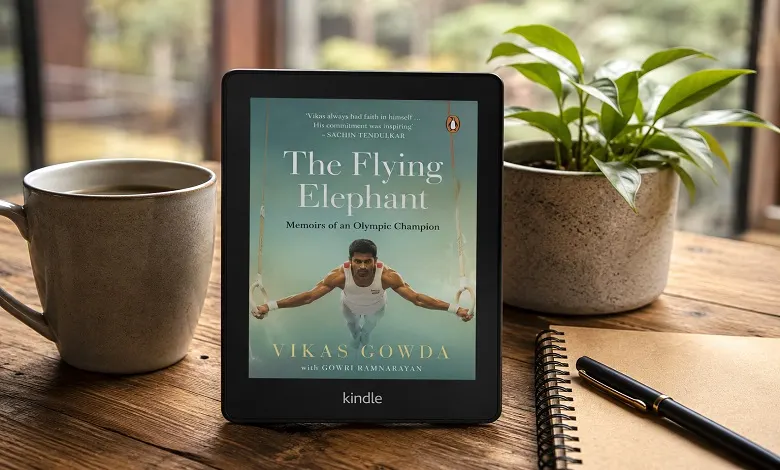
The Flying Elephant Memoirs of an Olympic Champion Kindle Edition offers readers more than a traditional account of medals and sporting achievements. Written by Alexander Savin, a celebrated Soviet volleyball player and Olympic champion, the memoir looks at the years of training, competition, teamwork, sacrifice, and personal experiences behind a remarkable athletic career.
For readers interested in Olympic history, volleyball, Soviet-era sport, or inspiring athlete biographies, the book provides an opportunity to explore elite competition from the perspective of someone who experienced it firsthand. The English Kindle edition also makes the memoir accessible to readers who prefer digital books.
The Flying Elephant: Memoirs of an Olympic Champion is a sports memoir centred on Alexander Savin and his career in Soviet volleyball.
Rather than presenting Olympic success simply as a collection of victories, the book explores the experiences that shaped Savin as an athlete and later as a coach. It provides insight into competitive volleyball, preparation for major tournaments, relationships between teammates, and the pressures associated with representing a powerful national sports program.
The English Kindle edition is listed at 514 pages and was published in October 2025. It also contains more than 240 photographs, adding a visual historical dimension to the memoir.
| Detail | Information |
| Book | The Flying Elephant: Memoirs of an Olympic Champion |
| Author | Alexander Savin |
| Subject | Volleyball and Olympic sports |
| Format | Kindle Edition |
| Language | English |
| Length | 514 pages |
| Publication | October 2025 |
| Photographs | 240+ archival photographs |
The exact Kindle features available to a reader can depend on the edition and Amazon marketplace, so readers should check the current listing before purchasing.
Alexander Savin is one of the notable figures associated with Soviet volleyball. His playing career placed him at the highest level of international competition, where he represented the USSR and competed in the Olympic Games.
Savin’s importance goes beyond a medal record. His career reflects an era when Soviet volleyball was internationally influential and when athletes were developed through highly structured training systems.
The memoir gives readers a chance to see that world through the eyes of an athlete who experienced it directly. It discusses competition, preparation, teammates, coaches, expectations, and the personal costs that can accompany elite sport.
That firsthand perspective is one of the reasons the book is particularly interesting to readers of sports history.
One of the most important aspects of Savin’s story is his Olympic career.
He won a silver medal with the Soviet volleyball team at the 1976 Montreal Olympics and later achieved Olympic gold at the 1980 Moscow Games.
Those two Olympic experiences provide an especially interesting contrast.
The Montreal Games represented the disappointment of finishing short of gold. Four years later, competing at home in Moscow, Savin and the Soviet team reached the top of the Olympic podium.
That progression—from defeat to eventual victory—is central to understanding the mindset behind elite athletic achievement.
An Olympic medal may appear to be the final result, but reaching that point requires years of preparation, physical conditioning, tactical development, teamwork, and the ability to respond to setbacks.
The book’s appeal comes from the combination of sporting history and personal reflection.
Elite volleyball requires considerably more than physical ability. Players need technical precision, tactical awareness, consistency, and the discipline to repeat demanding training routines.
Savin’s experiences provide a window into the culture surrounding Soviet-era elite sport and the expectations placed on athletes.
Volleyball is fundamentally a team sport. An exceptional individual cannot win a major international competition alone.
Communication, trust, positioning, coordination, and understanding teammates are essential.
A sports memoir from an Olympic-level volleyball player therefore offers lessons that extend beyond individual achievement. Success depends on how effectively talented people work together.
International athletes compete under enormous pressure. Olympic competition can place years of preparation into a few matches.
For athletes representing a national team, the pressure can be even greater.
The memoir’s value lies partly in exploring the person behind the athlete—the emotions, expectations, setbacks, and sacrifices that are often invisible when spectators see only the final score.
Another reason to read The Flying Elephant is its historical setting.
Soviet volleyball developed within a highly organized sports system that placed considerable emphasis on training, competition, and national representation. Savin’s career therefore intersects with a significant period in international volleyball history.
Readers interested in sports history can use the memoir to understand the athlete’s perspective on that environment rather than viewing Soviet volleyball only through statistics and tournament results.
The book’s archival photographs further contribute to this historical value. Reports about the Kindle edition describe more than 240 rare photographs connected with Savin’s career and the era in which he competed.
The photographs are more than decoration.
Sports photographs can preserve details that written memories cannot easily reproduce: uniforms, teammates, venues, training environments, celebrations, competitions, and moments from an athlete’s career.
For a memoir covering Soviet volleyball history, archival images can help readers visualize the period and the people involved.
The combination of personal narrative and historical photography makes the book potentially useful not only for casual sports fans but also for readers interested in volleyball’s development and Olympic history.
The title naturally raises a question: why call a sports memoir The Flying Elephant?
The phrase works as an unusual metaphor for achieving something that initially seems improbable.
An elephant is traditionally associated with weight and the inability to fly. Yet the image of a “flying elephant” suggests overcoming an apparent limitation and accomplishing something that seems impossible.
That idea fits naturally with elite sport.
Olympic athletes regularly attempt performances that appear almost beyond ordinary human ability. Years of training transform physical potential into extraordinary performance.
The title can therefore be viewed as a metaphor for ambition, transformation, and the pursuit of seemingly impossible goals.
Many sports biographies concentrate heavily on results: championships, medals, records, and famous matches.
The Flying Elephant has broader appeal because the story also considers the experiences behind those achievements.
Readers can find themes involving:
- Athletic discipline
- Teamwork
- Olympic competition
- Personal sacrifice
- Training culture
- Leadership
- Failure and recovery
- Coaching
- Athlete identity
- Soviet volleyball history
This broader perspective makes the memoir relevant even to people who are not serious volleyball followers.
Someone interested in how champions are developed may find as much value in the preparation and setbacks as in the final victories.
The Kindle edition is particularly convenient for readers who prefer digital access.
According to current information about the edition, the book is 514 pages and has a relatively large digital file size because of its photographic content. Listed Kindle features include enhanced typesetting, Page Flip, and Word Wise.
For readers using the Kindle app on a phone, tablet, or compatible reading device, digital access can make a long sports memoir easier to carry and revisit.
The photographic content is also an important consideration. Readers who particularly value historical images should check the current Kindle listing and device compatibility to make sure the reading experience meets their expectations.
One of the strongest reasons to read an athlete’s memoir is the opportunity to learn from experience.
Success Takes Time
Olympic achievement is rarely the product of a single moment. It is built through years of preparation.
Failure Can Become Part of Success
The difference between losing and eventually winning can be one of the most valuable parts of an athlete’s development.
Individual Talent Is Not Enough
Volleyball demonstrates particularly clearly that individual ability must function within a team.
Discipline Creates Consistency
Natural talent can open doors, but sustained performance requires routine, preparation, and commitment.
Champions Have a Human Side
Spectators often see athletes only during competition. Memoirs reveal the person behind the uniform—the doubts, sacrifices, relationships, and emotions that accompany a professional career.
The Flying Elephant can also be considered a record of sporting history.
Soviet volleyball was part of a much larger international sporting environment during the Cold War period. International competitions were not simply athletic events; they existed within a broader political and cultural context.
Savin’s experiences therefore have relevance beyond the volleyball court.
The memoir can help readers understand how athletes experienced training, competition, national expectations, and professional life during that period.
The inclusion of archival photographs strengthens that historical dimension.
The Flying Elephant Memoirs of an Olympic Champion Kindle Edition is an interesting choice for readers who want to look beyond Olympic medals and understand the experiences that help create an elite athlete.
Alexander Savin’s story brings together Olympic volleyball, Soviet sports history, teamwork, discipline, disappointment, achievement, and the personal realities of competitive sport. His silver medal at Montreal in 1976 and gold at Moscow in 1980 provide the competitive framework, while the memoir’s broader focus gives readers a closer look at the person behind those achievements.
The reported 514-page English Kindle edition and collection of more than 240 archival photographs also make it particularly interesting for readers who enjoy detailed sports biographies and historical material.
Ultimately, the greatest appeal of The Flying Elephant is not simply that Alexander Savin became an Olympic champion. It is the opportunity to understand the work, setbacks, teamwork, pressure, and persistence behind becoming one. For volleyball enthusiasts, Olympic-history readers, coaches, athletes, and anyone who enjoys authentic sports memoirs, it offers a compelling perspective on what championship-level sport can demand.
A. It is Alexander Savin’s sports memoir, focusing on his career in Soviet volleyball, Olympic competition, training, teammates, sporting experiences, and the personal side of elite athletics.
A. The memoir is associated with Alexander Savin, the Soviet volleyball player and Olympic champion whose career forms the foundation of the book.
A. Yes. An English Kindle edition is currently described in online listings and reviews, with a listed length of 514 pages.
A. The listed Kindle edition is 514 pages. Digital page counts can sometimes vary by device and display settings.
A. Yes. Current descriptions of the edition report more than 240 rare or archival photographs.
A. Volleyball is central to the memoir, but its themes extend to discipline, teamwork, pressure, personal sacrifice, leadership, and life as an elite athlete.
A. Savin won Olympic silver at the 1976 Montreal Games and Olympic gold at the 1980 Moscow Games as part of the Soviet volleyball team.
A. Yes. Readers interested in Olympic stories, sports history, athlete biographies, personal development, and overcoming adversity can appreciate the book even without extensive volleyball knowledge.
A. Besides its portability, the digital edition provides access to a long-form sports memoir that includes substantial photographic material. Current listings also identify Kindle features such as enhanced typesetting and Page Flip.
 Mustafizur